


.png "Durable Lightweight Spinner Luggage")




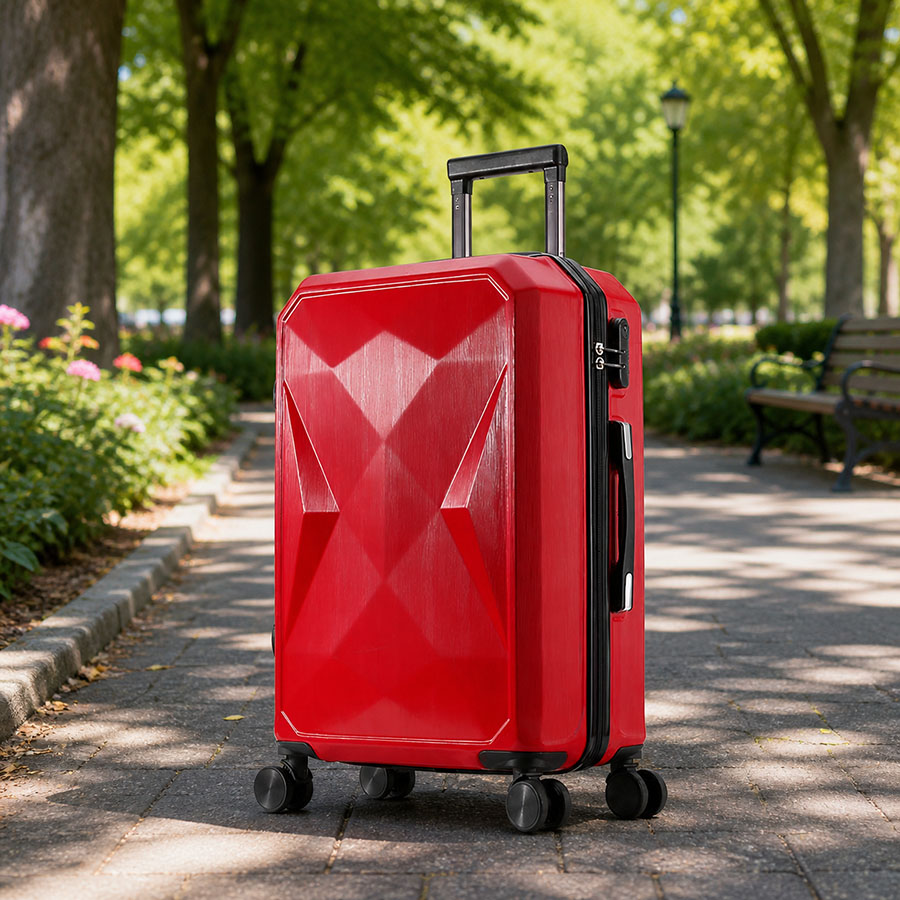
How Many Sample Rounds Are Needed for OEM and Custom Luggage Products?
For luggage brands, importers, wholesalers, and distributors, sampling is one of the most important steps before mass production.
A common question is:
How many sample rounds are actually needed for a luggage product?
There is no fixed answer.
A suitcase based on an existing, proven structure may require only one or two sample rounds. A more customized project involving new dimensions, shell finishes, components, colors, interiors, logos, or structural changes may require additional rounds before it is ready for production.
The real objective is not to reduce the number of samples at all costs.
The goal is to reach a production-ready sample that clearly reflects the buyer’s requirements and can be used as a reliable reference for mass production.
Whether you are working with an OEM hard shell luggage manufacturer China, a custom luggage manufacturer, or developing a new suitcase collection from an existing design, an efficient sampling process can help reduce revisions, improve communication, and lower production risk.
How Many Sample Rounds Are Typical for Luggage Development?
For many luggage projects, the sampling process can be divided into three possible stages.
Round 1: Concept and Structure Verification
The first sample turns drawings, specifications, reference images, and product ideas into a physical suitcase.
At this stage, buyers should focus on the main product direction:
Overall dimensions
Shell shape
Product structure
Material
Color
Surface finish
Wheel and trolley configuration
Zipper construction
Interior layout
Logo position
Basic functionality
The first sample is often where differences between an idea on paper and the actual physical product become most obvious.
Round 2: Modification and Detail Confirmation
If the first sample requires changes, the second round is used to incorporate those revisions.
Typical adjustments may include:
Color correction
Shell finish
Wheel design
Trolley system
Handle details
Zipper configuration
Interior organization
Logo size or position
Accessories
Packaging details
For customized projects, this stage is often where the product begins to move from a general concept toward a more market-ready design.
Round 3: Final Pre-Production Confirmation
A third sample may be appropriate when the project includes more substantial customization or when several important changes were made after the previous round.
The purpose is to confirm that all agreed revisions have been correctly incorporated before mass production begins.
However, this does not mean every project needs three samples.
A mature existing design with limited customization may be ready after one or two rounds. A new structure or highly customized suitcase may require more.
The correct number of sample rounds should follow the complexity and risk of the project, not an arbitrary rule.
What Determines the Number of Luggage Sample Rounds?
Several factors influence how quickly a luggage sample can reach final approval.
1. Level of Product Customization
The more elements being changed, the more carefully the sample should be reviewed.
When working with a custom luggage manufacturer, customization may include:
Shell dimensions
Shell appearance
Surface texture
Colors
Wheels
Trolley systems
Handles
Zippers
Interior lining
Compartments
Accessories
Logos
Packaging
Changing one element may also influence another part of the suitcase.
For example, changing dimensions can affect the shell, zipper length, interior construction, trolley system, and packaging.
This is why highly customized products often require more sample confirmation than standard models.
2. Product Structure
Different luggage structures involve different levels of development complexity.
A conventional zipper suitcase based on an established design may be relatively straightforward.
However, when working with a zipper luggage factory on a project involving new dimensions, unusual components, special finishes, or structural modifications, additional verification may be necessary.
The sample should confirm not only what the suitcase looks like, but also whether the shell, zipper, trolley, wheels, handles, interior, and other components work properly together.
The more structural changes involved, the more important sample verification becomes.
3. Material Selection
Material choices can influence appearance, weight, flexibility, structure, and overall product feel.
When working with a polycarbonate suitcase supplier, buyers may need to confirm:
Shell color
Surface appearance
Matte or glossy finish
Special textures
Product weight
Overall construction
Compatibility with other components
At Jiangxi Travel Luggage Factory, we use selected high-quality imported raw materials and can provide different surface treatments, including matte, glossy, and special textures, according to different product and brand requirements.
Confirming these details during the sampling stage helps create a clearer reference for later production.
4. Product Size
Large checked luggage may require different considerations from smaller carry-on products.
When working with a checked luggage OEM factory, buyers should consider whether the selected components and overall structure are appropriate for the intended suitcase size and market positioning.
A larger suitcase may place different demands on:
Wheels
Trolley systems
Carry handles
Zippers
Shell structure
Interior organization
This makes sample evaluation particularly important for larger travel products.
What Should Buyers Check on the First Luggage Sample?
The first sample should not be reviewed only for appearance.
It should be treated as a complete product evaluation.
Important areas include:
Overall suitcase dimensions
Shell shape
Shell material
Surface finish
Color
Zipper operation
Wheel movement and noise
Trolley handle operation
Carry handles
Interior layout
Lining
Accessories
Hardware
Logo size
Logo position
Overall workmanship
Packaging requirements
A structured review is much more efficient than discovering one problem at a time over several rounds.
For B2B buyers, it is useful to create one complete feedback document rather than sending separate comments over several days.
Why Do Some Luggage Projects Need More Sample Rounds?
More sample rounds do not automatically mean the project is going badly.
Sometimes they simply reflect the level of customization.
For example, after seeing the first physical sample, the buyer may decide to:
Adjust the shell color
Change a wheel design
Modify the trolley system
Refine the interior layout
Change logo positioning
Modify accessories
Adjust dimensions
Revise a surface finish
When working with a custom suitcase manufacturer, these changes may be reasonable if the goal is to create a more differentiated product rather than purchase an existing model.
The key question should always be:
Have all important product details been confirmed clearly enough for mass production?
If the answer is no, moving into production simply to avoid another sample round can create much greater risk later.
When Is Another Sample Round Actually Necessary?
Not every small change requires a completely new sample.
However, another physical sample may be worth considering when a change affects:
Product dimensions
Shell structure
Major components
Zipper construction
Wheel or trolley configuration
Interior structure
Functional performance
Overall appearance in a significant way
By contrast, some relatively minor changes may sometimes be confirmed through clear specifications, drawings, color references, or other documented approvals.
The correct approach depends on the product and the importance of the change.
The closer the project gets to mass production, the more important it becomes to remove ambiguity.
How Can Buyers Reduce Unnecessary Sample Rounds?
Some revisions are unavoidable, but many unnecessary rounds can be reduced through better preparation.
Provide Complete Specifications from the Beginning
Before sample development starts, buyers should provide as much information as possible.
This may include:
Dimensions
Reference images
Drawings
Target colors
Material requirements
Surface finishes
Component preferences
Interior design
Logo files
Packaging requirements
Target market
Price positioning
The clearer the initial requirements, the less room there is for different interpretations.
Consolidate Feedback into One Revision List
Instead of sending individual comments at different times, review the full sample and combine all necessary changes into one structured revision list.
Feedback can be grouped into sections such as:
Shell
Color
Zipper
Wheels
Trolley
Handles
Interior
Logo
Accessories
Packaging
This helps the factory understand what should change and what has already been approved.
Use Measurements, Drawings, and Marked Photos
Comments such as:
“Make it slightly larger.”
“Move the logo a little.”
“Change the handle position.”
can be interpreted differently.
Whenever possible, use exact dimensions, drawings, or clearly marked photos.
Precise communication becomes increasingly important as the project gets closer to production.
Avoid Unnecessary Late-Stage Changes
Late structural changes may affect several other components.
A change in suitcase dimensions, for example, may influence:
Shell tooling or construction
Zipper length
Trolley dimensions
Interior layout
Accessories
Packaging
Major decisions should therefore be confirmed as early as possible.
This helps later sample rounds focus on refinement rather than redesign.
When Is a Luggage Sample Ready for Mass Production?
A sample is ready for mass production when the buyer and manufacturer have clearly aligned on the important product specifications.
Before approval, buyers should confirm that the final sample or documented specifications accurately represent what they expect to receive in the bulk order.
The sample should establish a reference for:
Product appearance
Dimensions
Materials
Colors
Components
Functional details
Workmanship
Branding
Packaging
The purpose of sampling is not simply to create an attractive prototype.
It is to establish a clear and repeatable production standard.
Why Sample Approval and Mass Production Must Be Connected
A perfect sample has limited value if mass production cannot maintain the same standard.
This is where manufacturing control becomes important.
At Jiangxi Travel Luggage Factory, incoming raw materials are strictly controlled before production. Production processes are inspected, and finished products receive additional checking before shipment.
Our experienced production workers also pay attention to details such as wheel performance and smooth trolley operation.
For buyers looking for an OEM hard shell luggage manufacturer China, sample development should therefore be evaluated together with the supplier’s ability to maintain quality consistency after approval.
Is One Sample Round Enough for OEM Luggage?
Sometimes, yes.
If a buyer selects an existing, mature luggage model and only requires relatively simple customization, the first sample may already be close to the final requirement.
Examples may include:
Color changes
Logo customization
Minor accessory changes
Packaging changes
For a more complex customized project, however, approving the first sample simply to shorten development time may not be the best decision.
The number of rounds should follow the product.
A practical sampling process is:
Define product requirements.
Develop the first sample.
Review the complete product.
Consolidate all necessary changes.
Confirm revisions clearly.
Produce another sample if important changes require physical verification.
Approve production only when both sides are aligned.
This approach helps balance development efficiency with production risk.
How to Choose the Right Manufacturer for Sample Development
Sampling is also an opportunity to evaluate a manufacturing partner.
During the process, buyers can observe whether the supplier:
Understands product requirements
Communicates clearly
Pays attention to manufacturing details
Handles customization effectively
Records changes accurately
Maintains consistency between development and production
A good OEM partner should not simply make a sample.
It should help turn the approved product into repeatable mass production.
Since 2018, Jiangxi Travel Luggage Factory has focused on the development and manufacturing of zipper luggage.
We support both larger-volume production and smaller-batch, multi-style customization through flexible production capabilities, while maintaining our focus on product quality and manufacturing consistency.
Our goal is to create continuous value for customers rather than simply complete one order.
Final Sample Approval Checklist for B2B Luggage Buyers
Before confirming mass production, buyers can review the following points:
Are the dimensions correct?
Is the shell material confirmed?
Are the color and surface finish approved?
Do the zippers operate properly?
Are the wheels correct?
Does the trolley operate smoothly?
Are the handles and accessories confirmed?
Is the interior layout correct?
Are logos positioned correctly?
Is the overall workmanship acceptable?
Are packaging details confirmed?
Have all changes been documented clearly?
If the answer to these questions is yes, the project is much closer to being production-ready.
Start Your Next Custom Luggage Project with a Clear Sampling Process
So, how many sample rounds are needed for luggage products?
There is no fixed number.
A standard suitcase may require only limited sampling, while a highly customized project may require several rounds before all important details are ready for production.
For B2B buyers, the better question is not:
“How can we reduce the number of samples?”
It is:
“How can we reach an accurate, production-ready sample as efficiently as possible?”
Clear specifications, consolidated feedback, precise measurements, structured sample reviews, and close communication with the manufacturer can make a significant difference.
If you are planning a new luggage collection, developing a customized suitcase, or looking for a reliable OEM manufacturing partner, contact Jiangxi Travel Luggage Factory with your drawings, reference images, specifications, target market, customization requirements, order quantity, and purchasing requirements.
We can discuss the most appropriate sample-development approach for your luggage project before moving toward mass production.
READ MORE:
How to Improve Customer Satisfaction with the Right Luggage Products and Manufacturing Partner
Jiangxi Travel Luggage and Leather Goods Manufacturing Co.Ltd.
Justin Huang(Executive Manager)
Mob./ WhatsApp / Wechat: +86 138 19731968
Email: justin@justtravelluggage.com
Website: www.justtravelluggage.com
Youtube:
https://youtube.com/@boss_luggage_factory?si=hSPCzhqYHvDezlKK
LinkedIn:
http://linkedin.com/in/志军-黄-5b610b126
Instagram:
https://www.instagram.com/45.2513980/
Facebook:
https://www.facebook.com/profile.php?id=61582051708703&sk=reels_tab
Pinterest:
https://www.pinterest.com/Travelluggage001/
.png "Expandable trolley case")
Company Name:
Jiangxi Travel Luggage And Leather Goods Manufacturing Co.Ltd
Tel: +86 13819731968
E-mail: justin@justtravelluggage.com